
People's Initiative for Learning and Community Development (PILCD) is a non-government organization committed to the development of marginalized communities and vulnerable sectors through community education and social action.
PILCD strongly believes in the power of literacy and education to combat poverty and exclusion. more
Education has always been hailed as a powerful tool to address development issues. However, the challenges of climate change, poverty and growing economic inequalities brings us to confront our current notion of education.
What kind of education could bring about a better world for present and future generations?
The impacts of global warming and climate change is said to be “the greatest injustice of our time”. The world’s poorest people have contributed least to its cause but they are the ones who suffer most from its devastating effects.
more
The 2003 Functional Literacy, Education and Mass Media Survey (FLEMMS) revealed that one out of ten Filipinos, 10 to 64 years old are completely illiterate. Meaning 5.2 million Filipinos cannot read and write simple words or sentences in any language and around 9.6 million who could read or write but could not comprehend a full paragraph consisting of a few sentences as well as lack of certain numeracy skills and basic communication skills.
Anchored from an action-learning approach, PILCD's Capacity Development of community-based organizations and self-help groups is a continuing training program geared at building people’s capabilities in the field of but not limited to: organizational and leadership development; negotiations and conflict management; local governance and participation; livelihood skills enhancement and micro-enterprise development; gender relations; environmental protection and sustainable development; local history and cultural literacy; democracy, peace and human rights.
Climate change impacts the poor and undermines development interventions addressing poverty.
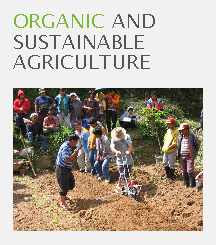
Sustainable Agriculture Education is a continuing education and training for small farmers on sustainable agriculture (including soil management, crop systems, and pest/disease management), leadership and entrepreneurship/business training.